At Spine, Neck, & Back Specialists, with locations serving Bloomfield, Englewood, Kearny, Union City, and Teaneck, NJ, spine care is continually evolving. One of the most transformative areas in modern medicine is minimally invasive spine surgery (MISS). Over the past two decades, MISS has shifted from being a niche technique to a widely adopted approach that emphasizes precision, smaller incisions, reduced trauma, and faster recovery. For patients and clinicians alike, the promise of MISS is not only improved surgical outcomes but also enhanced overall patient experience.
Dr. Jay Reidler has observed how innovations in imaging, instrumentation, and robotic guidance have expanded the possibilities of minimally invasive procedures. These advancements allow surgeons to address complex spinal conditions with greater accuracy and reduced risk. As technology progresses, MISS is poised to become even safer, more effective, and more accessible, shaping the future of spine care for patients across New Jersey.
Key Trends in Minimally Invasive Spine Surgery
Enhanced Imaging and Navigation
One of the most significant trends in MISS is the integration of advanced imaging and surgical navigation. Modern techniques combine preoperative CT or MRI scans with intraoperative fluoroscopy or 3D imaging, providing surgeons with highly detailed views of the spine. This integration allows for precise planning of screw placement, decompression, and spinal alignment, significantly reducing the risk of complications.
Navigation systems guide surgeons in real-time, allowing them to make adjustments based on patient anatomy and intraoperative findings. The precision provided by these systems enhances outcomes for procedures such as spinal fusions, decompressions, and tumor resections. For patients, this translates into more predictable results, reduced blood loss, and smaller incisions, all contributing to faster recovery times.
Robotic Assistance and Automation
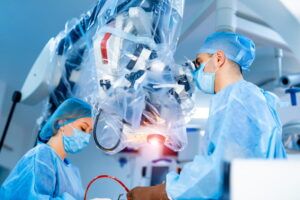
Robotic technology is emerging as a powerful tool in minimally invasive spine surgery. Robots provide steady guidance, enhance dexterity, and enable more accurate placement of implants. While the robot does not operate independently, it acts as an extension of the surgeon’s skill, allowing for meticulous execution of complex procedures.
This innovation is particularly beneficial for complex spinal deformities or revisions, where precision is critical. Robotic systems reduce human error and increase the likelihood of successful outcomes, while also minimizing tissue damage and postoperative pain. As robotic technology advances, surgeons are able to perform increasingly intricate procedures with less risk and greater efficiency.
Benefits for Patients
Minimally invasive spine surgery offers several advantages compared to traditional open surgery. Key benefits include:
- Smaller incisions, leading to reduced tissue trauma and scarring
- Lower risk of infection and blood loss
- Shorter hospital stays and faster return to daily activities
- Reduced postoperative pain and need for pain medications
These benefits are especially important for patients seeking spine surgery with minimal disruption to their daily lives. Faster recovery times and decreased pain allow individuals to resume normal activities more quickly, while smaller incisions and reduced tissue damage contribute to improved long-term outcomes.
Emerging Innovations
The future of MISS is being shaped by emerging innovations that promise even greater precision and patient safety. Developments include augmented reality (AR) systems that overlay digital images onto the surgical field, enhancing the surgeon’s perception of anatomy. Artificial intelligence (AI) is being integrated to analyze patient imaging, predict optimal surgical paths, and assist with decision-making.
In addition, bioengineered implants and materials are improving spinal fusion outcomes by promoting bone growth and stability while minimizing complications. Personalized preoperative planning and simulation allow surgeons to anticipate challenges, test strategies, and optimize procedures before entering the operating room. These advances indicate a future where spine surgery is not only safer but also more tailored to individual patient anatomy and needs.
Shaping the Future of Spine Care in New Jersey
Minimally invasive spine surgery represents a major leap forward in the treatment of spinal conditions. At Spine, Neck, & Back Specialists, serving Bloomfield, Englewood, Kearny, Union City, and Teaneck, NJ, innovations in imaging, navigation, robotics, and bioengineered materials are reshaping the possibilities for patients. The trends and technologies driving MISS today are setting the stage for a future where spine surgery is safer, more precise, and more patient-centered. For individuals seeking advanced spinal care, understanding these trends highlights the promising future of treatment and recovery.
Resources:
McLaughlin, K. A., & Nolen-Hoeksema, S. (2011). Rumination as a Transdiagnostic Factor in Depression and Anxiety. Behavior Researcher and Therapy.
Wang, M. Y., & Grossman, J. (2019). Robotic and Minimally Invasive Spine Surgery: Current Applications and Future Directions. Neurosurgery Clinics of North America.
Mobbs, R. J., et al. (2020). Advances in Minimally Invasive Spine Surgery: Techniques and Outcomes. Journal of Spine Surgery.